


Knowledge Valorization Centre

Knowledge Valorization Centre of
HEI “Open International University of Human Development “Ukraine”
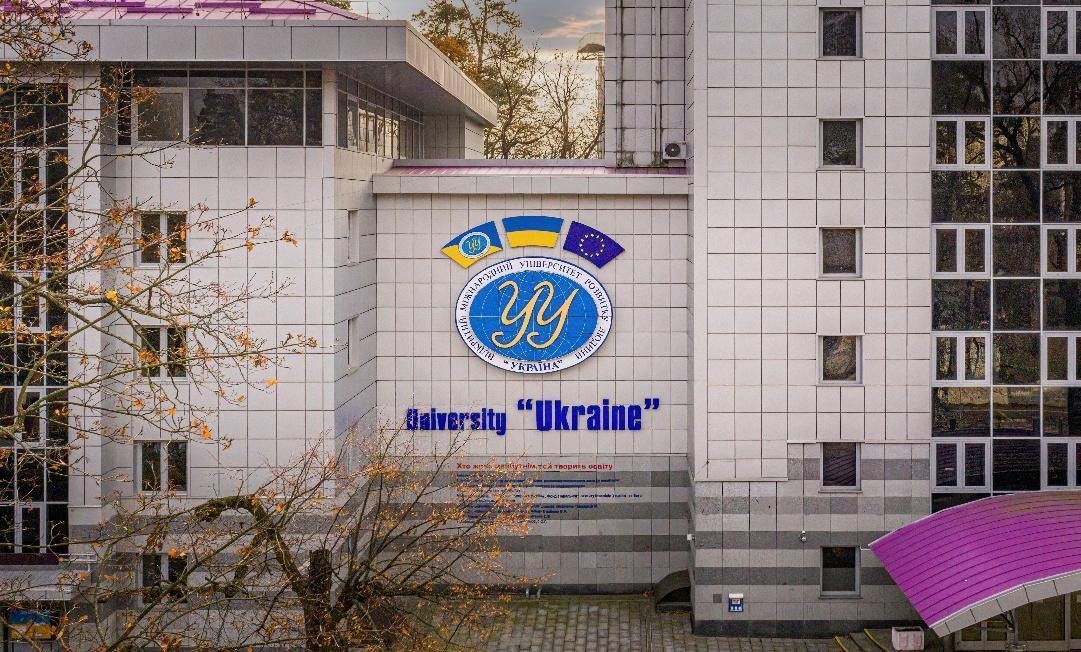
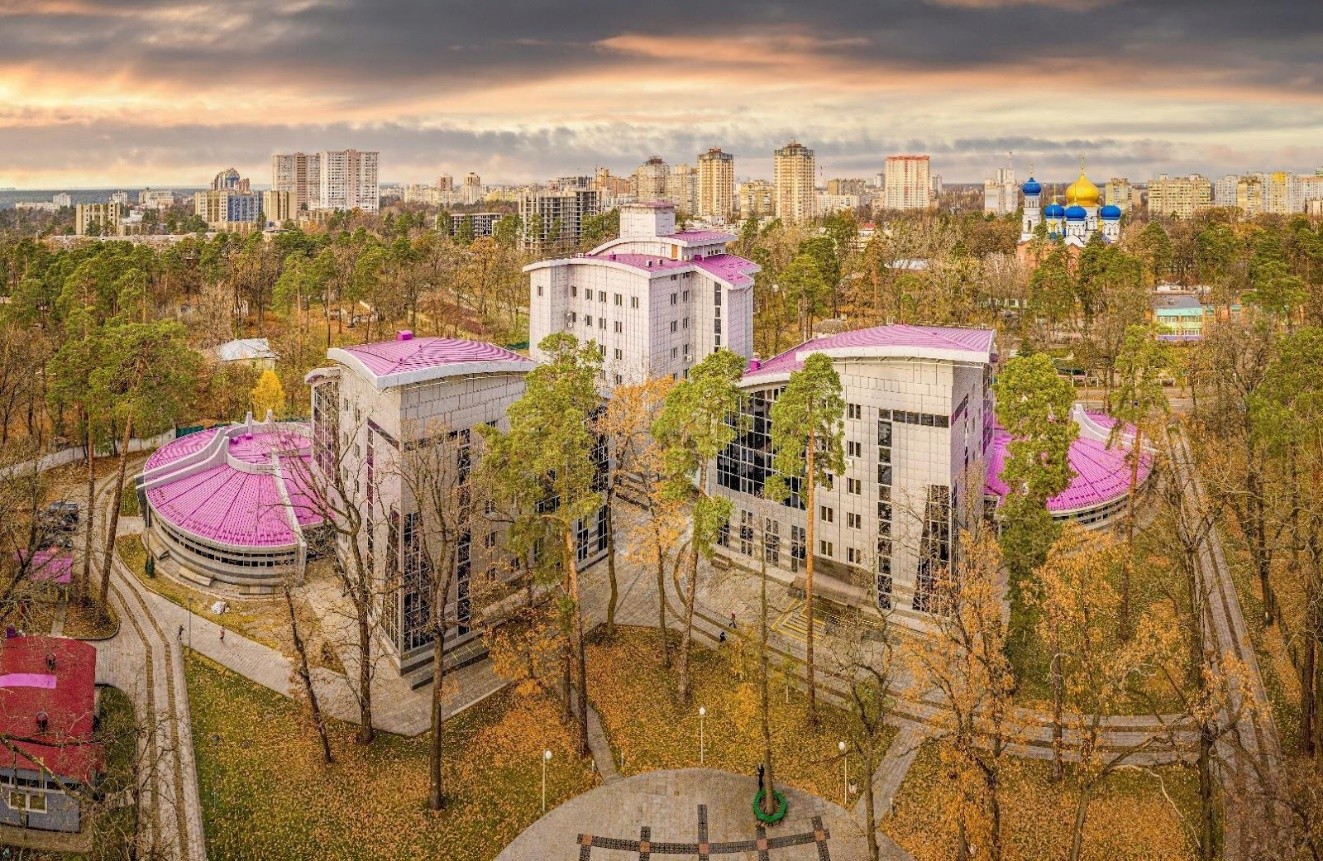
The Knowledge Valorization Centre (KVC_ UU) was established at the Open International University of Human Development “Ukraine”, located in Kyiv. The Center was founded in a region of strategic importance, functioning as a key hub that ensures logistical, humanitarian, economic, and resource support through the university’s territorially separated branches during wartime.
In the current conditions of ongoing missile attacks, critical pressure on infrastructure, and a massive influx of internally displaced persons, the Kyiv region has developed a unique environment for regional development. This makes issues of accessibility, inclusion, and availability of educational and social services particularly relevant.
The challenges faced by Kyiv as a high-risk region include:
• Growing threats to public safety due to missile strikes, drones, and other forms of military aggression.
• Overload of social and infrastructure systems, including education, healthcare, transport logistics, and energy.
• Increasing need for social support for internally displaced persons, including access to affordable educational, medical, and psychological services.
ф• Problems ensuring equal access to services for vulnerable groups, including people with disabilities, the elderly, families with children, and veterans.
• The need to adapt the educational environment to wartime conditions, including digitalisation, support elements, psychological resilience, and accessibility of learning.
The Center officially began operating on April 30, 2025, in accordance with the Order of the President of the University “Ukraine” No. 82 dated May 01, 2025, within the framework of the project IMPACT-Campus: Knowledge Valorization Centres for Sustainable Entrepreneurship and Digital Transformation KVC_ UU, funded under the EIT HEI
Initiative, Call 4 2024, Track A.
Institutional Basis, Governance and Team
The Knowledge Valorization Centre KVC_ UU operates within the Open International University of Human Development “Ukraine” as a structural unit reporting directly to the President of the University. The Center is headed by Iryna Talanchuk, PhD in Law, Vice-Rector for Administrative and Human Resources.
The core team of the Center consists of five specialists in entrepreneurship, digital technologies, business modelling, social innovation, inclusion, and programme evaluation. The team coordinates the Center’s activities and collaborates with other university departments.
The Center KVC_ UU functions as an interdisciplinary platform that brings together the expertise of seven institutes of the University “Ukraine”:
- Institute of Economics and Management
- Engineering and Technology Institute
- Institute of Social Technologies
- Institute of Philology and Mass Communications
- Institute of Law and Public Relations
- Institute of Computer Technologies
- Institute of Biomedical Technologies
The implementation of the Center’s programmes involves institute directors, heads of territorial subdivisions, researchers, administrative staff, programme coordinators, and external experts. The extended team possesses expertise in entrepreneurship, digital transformation, the green economy, social innovation, inclusion, psychology, design, social work, law, economics, tourism, ecology, food technologies, rehabilitation, IT, and horticultural therapy.
This model ensures comprehensive engagement with external stakeholders and high-quality implementation of activities—training sessions, mentoring, workshops, and innovation labs. All events are organised with an emphasis on accessibility, particularly for vulnerable groups.
The internal governance system promotes shared leadership, active student involvement, and inclusive approaches at all stages of KVC_ UU activities. This model aligns with the long-term strategy of the University “Ukraine” and the Innovation Strategy of Ukraine, both focused on accessibility, equal opportunities, diversity, and sustainable development.
Stakeholder Ecosystem and Partnerships
The ecosystem in which KVC_ UU operates includes key stakeholder groups: educational institutions at all levels, small and medium-sized enterprises, public authorities, local self-government bodies, and civil society organisations. Collaboration with these partners ensures comprehensive support for inclusive educational, social, and entrepreneurial initiatives.
Such interaction, engagement, and mentoring support provided by KVC_ UU create a favourable academic environment for student development, fostering their active participation in the learning process and practical initiatives. The Center KVC_ UU provides opportunities for internships with partner organisations, participation in joint projects and grant programmes, enabling students to gain real-world experience and develop professional skills. Joint projects focus on creating a barrier-free environment, enhancing economic resilience, and promoting social responsibility, while also providing conditions for the practical application of students' knowledge and the integration of their initiatives into real innovative processes.
The Center KVC_ UU has signed formal cooperation agreements with several partners, including:
- NGO “Social Perspective”
- All-Ukrainian Youth Civic Organisation of Students with Disabilities “Gaudeamus”
- All-Ukrainian Association of Psychologists and Expert Trainers
- Department of Culture and Tourism of the Kyiv Regional State Administration
KVC_UU achievements in 2025
Since its establishment, KVC_UU has contributed directly to the key metrics defined in the IMPACT-Campus project:
- trained 41 students
- trained 14 academic and 10 non-academic staff
- mentored 8 students, 2 academic and 2 non-academic staff
- supported 8 student teams at early stages of startup development
- established or strengthened 4 regional partnerships
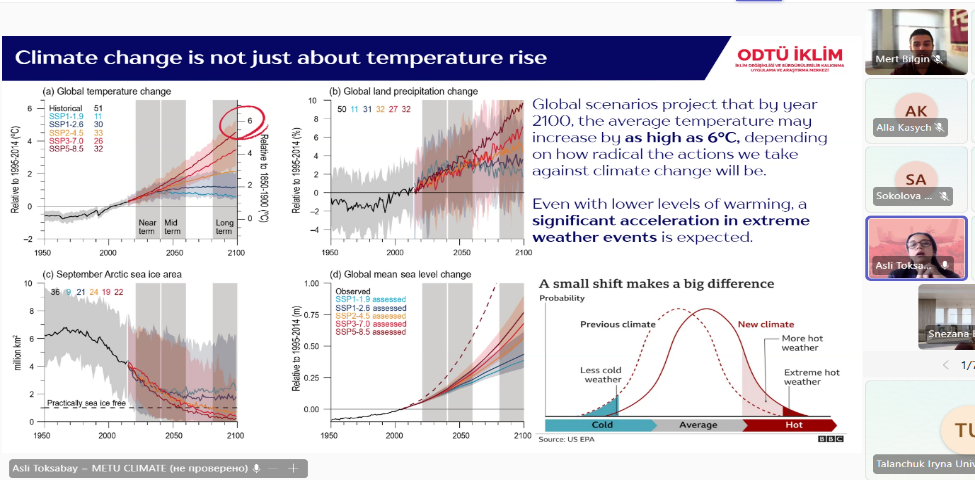
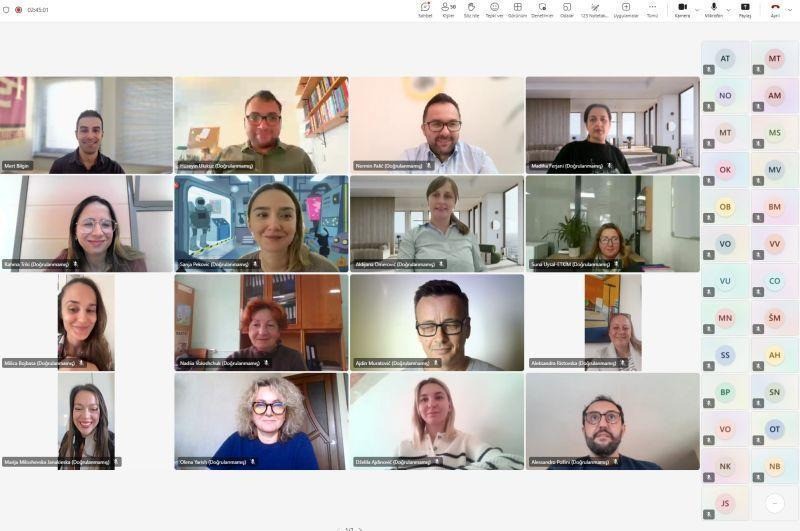
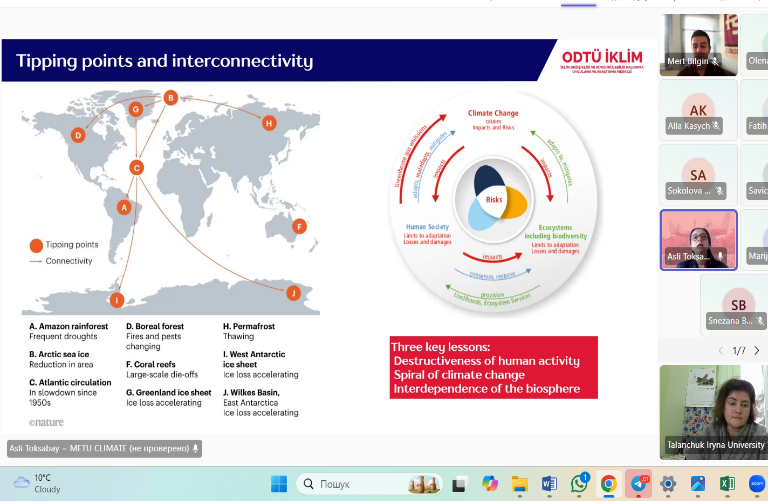
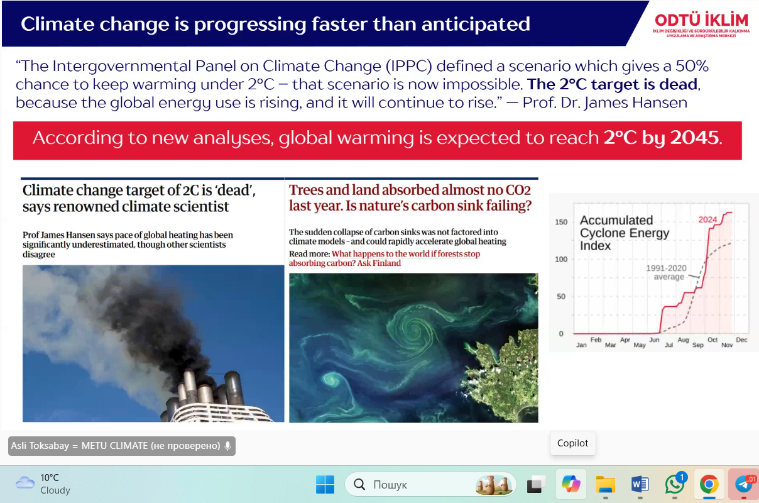


Institutional and Regional Changes Enabled by theKVC UU
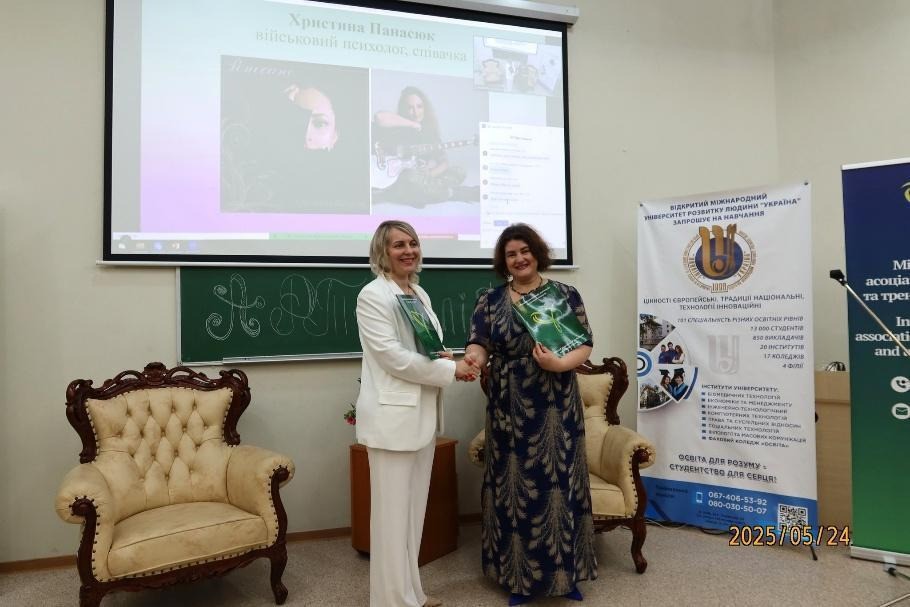
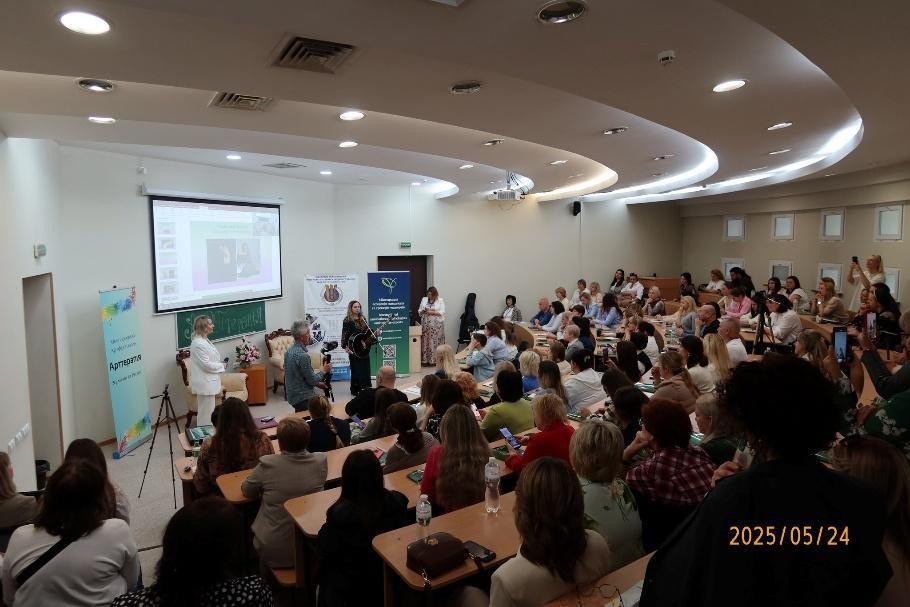
Within the strategic direction of KVC_ UU, on May 24, 2025, the Center’s Director, Iryna Talanchuk, with the support of experts from the Institute of Social Technologies, held negotiations with the NGO “International Association of Psychologists and Expert Trainers” and organized the Fifth International Festival “Art Therapy: Healing and Resources” at the University “Ukraine.”
The event brought together over 150 participants — students, faculty, veterans, military personnel, psychologists, volunteers, and trainers — creating a safe and open space for healing, socialization, and restoration of inner resources. Art therapy promoted the development of inclusive practices, enhanced psychological resilience and human potential, and improved employability under wartime conditions. During the festival, 22 masterclasses were conducted, and memoranda of cooperation were signed with the International Association of Psychologists and Expert Trainers, opening new opportunities for joint support and healing projects.
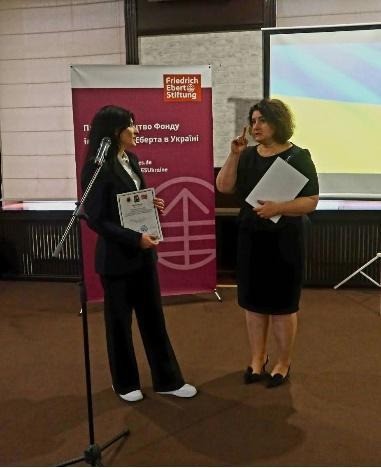
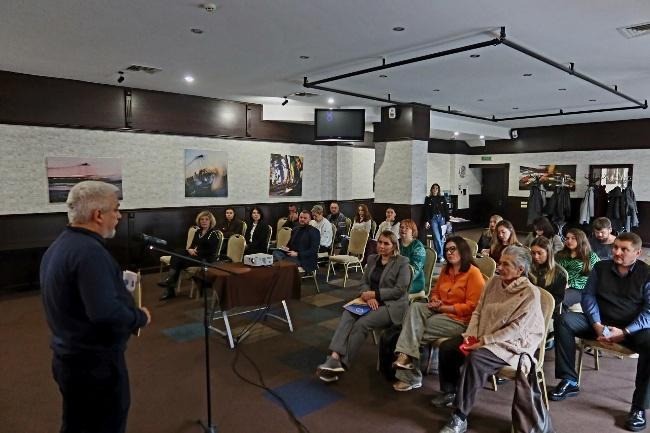
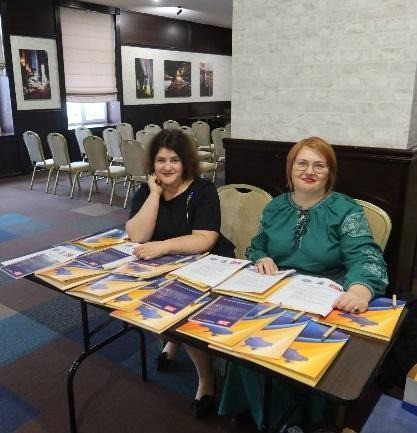
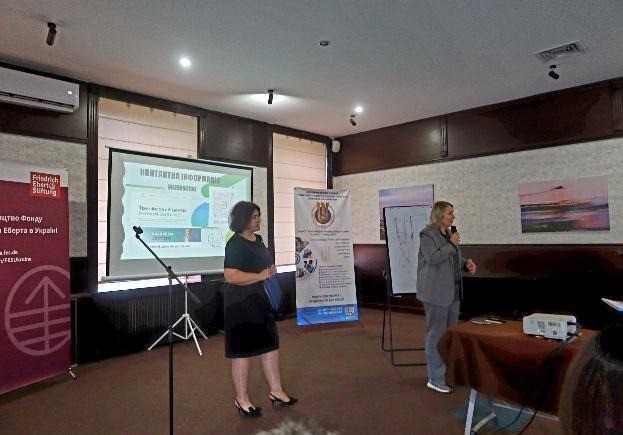
Within this framework, on the initiative of the KVC_ UU expert group in tourism, psychology, horticultural therapy, and rehabilitation, a programme was developed and, with the support of the Friedrich Ebert Foundation in Ukraine and local administrations, a series of WORKSHOPS was conducted:
“Socialization and Psychological Rehabilitation through Inclusive Tourism: Effective Approaches in Working with Veterans and People with Disabilities”
- October 9, 2025, Irpin — participants included representatives of the Department of Culture and Tourism of the Kyiv Regional State Administration, deputies, scholars, international project experts, the NGO “International Association of Psychologists and Expert Trainers,” seven museums of Kyiv region, and local authorities.
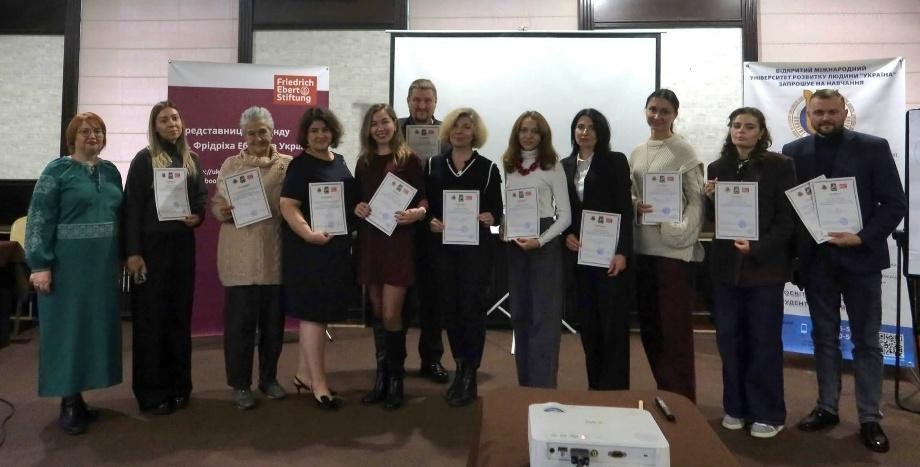
November 11, 2025, Lutsk — held at the Lutsk Institute of Human Development, attended by representatives of Lutsk City Council, Volyn Regional State Administration, the Department of Veterans Affairs, representatives of five museums, faculty, students, and experts in tourism, horticultural therapy, and psychology.
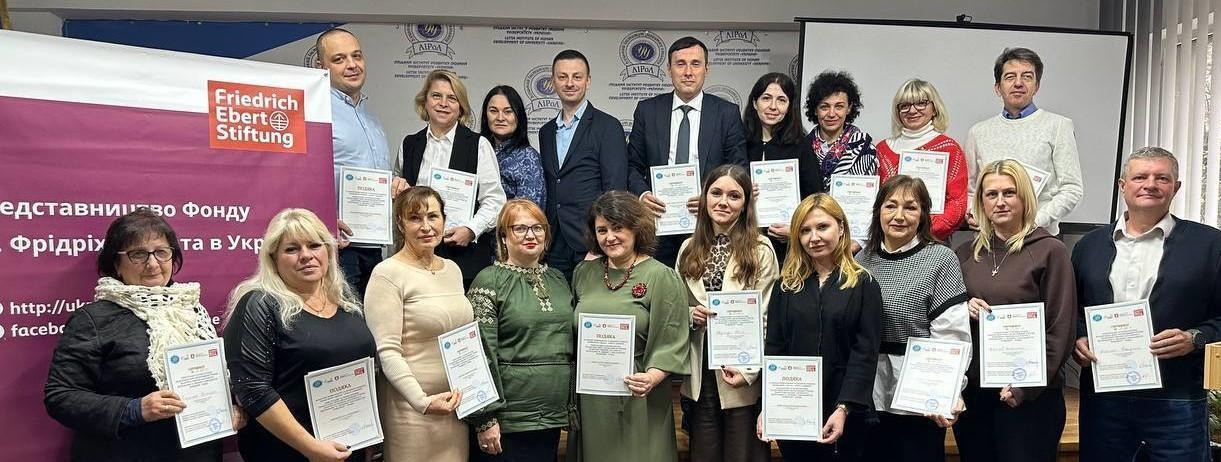
November 12, 2025, Khmelnytskyi — held at the Khmelnytskyi Institute of Social Technologies, University “Ukraine,” attended by representatives of the municipal institution “Veteran Space ‘VETERAN PRO’,” an expert in military psychology, veterans, faculty, students, and experts in tourism, horticultural therapy, and psychology.
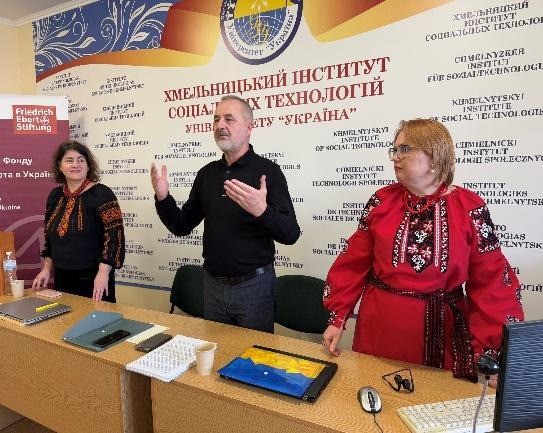
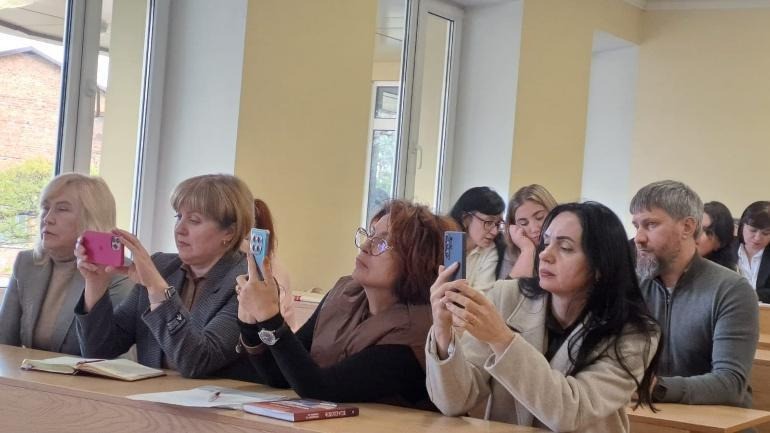
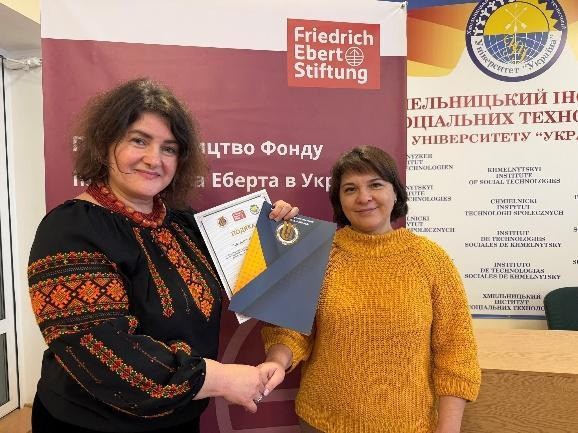
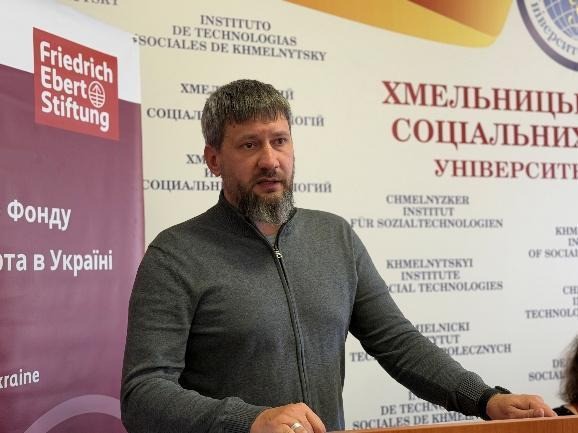
Participants discussed how tourism helps veterans and people with disabilities to recover, socialize, and receive psychological support. Special attention was paid to creating barrier-free spaces in museums and recreational facilities. The event contributed to the expansion of the client base, the introduction of innovative tools to attract new visitors, and the improvement of socialization and rehabilitation effectiveness.
The development and scaling of the WORKSHOP programme creates systemic approaches to working with veterans and people with disabilities, promoting the development of inclusive tourism at the regional level.
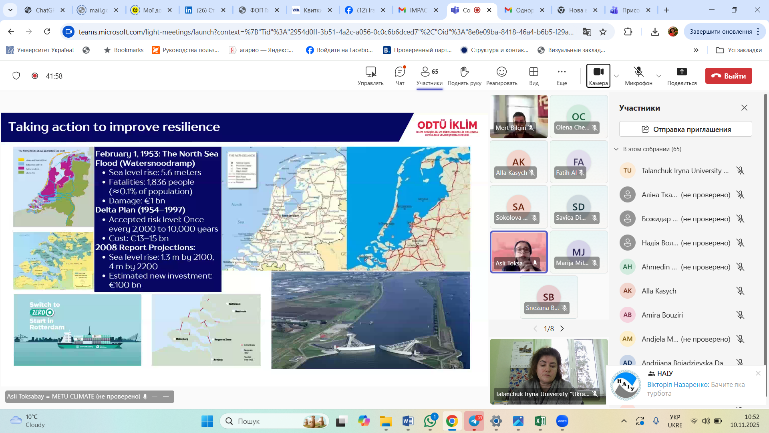
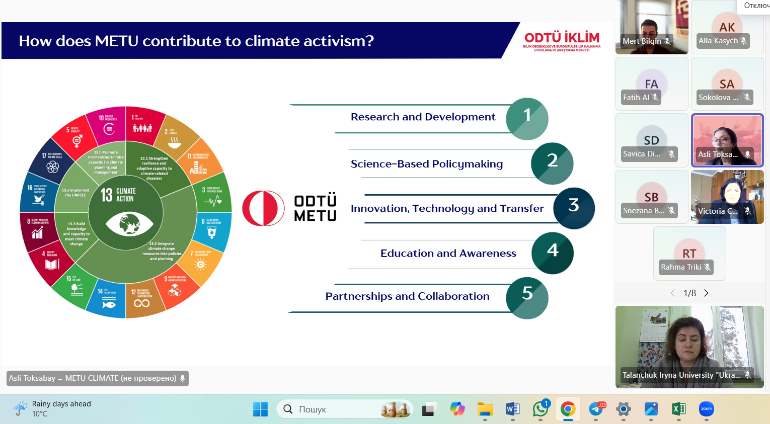
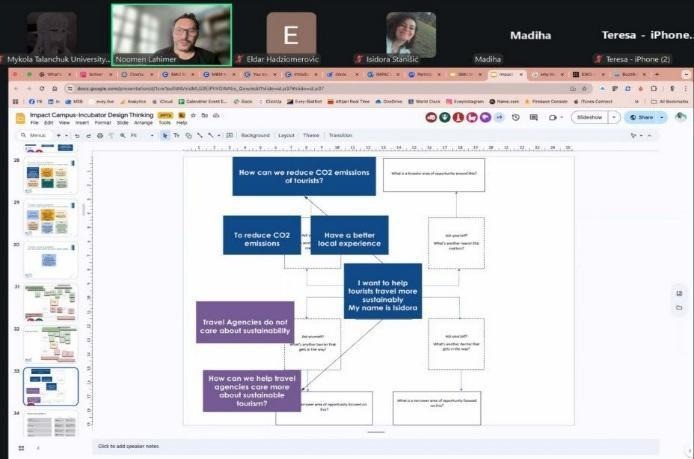
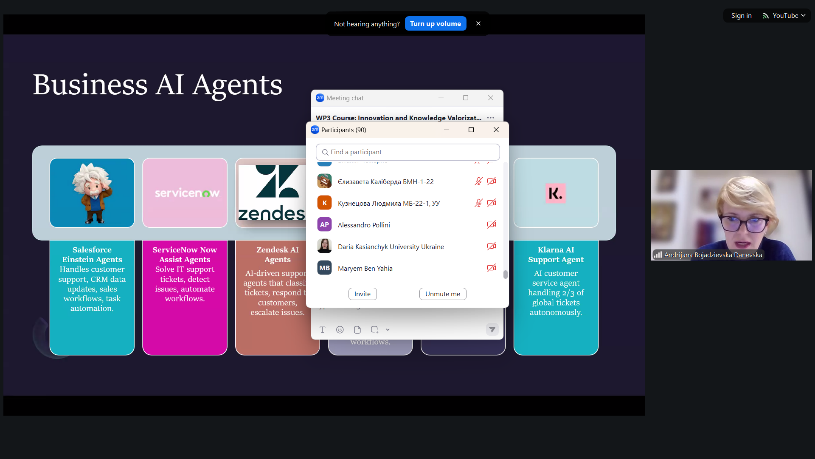
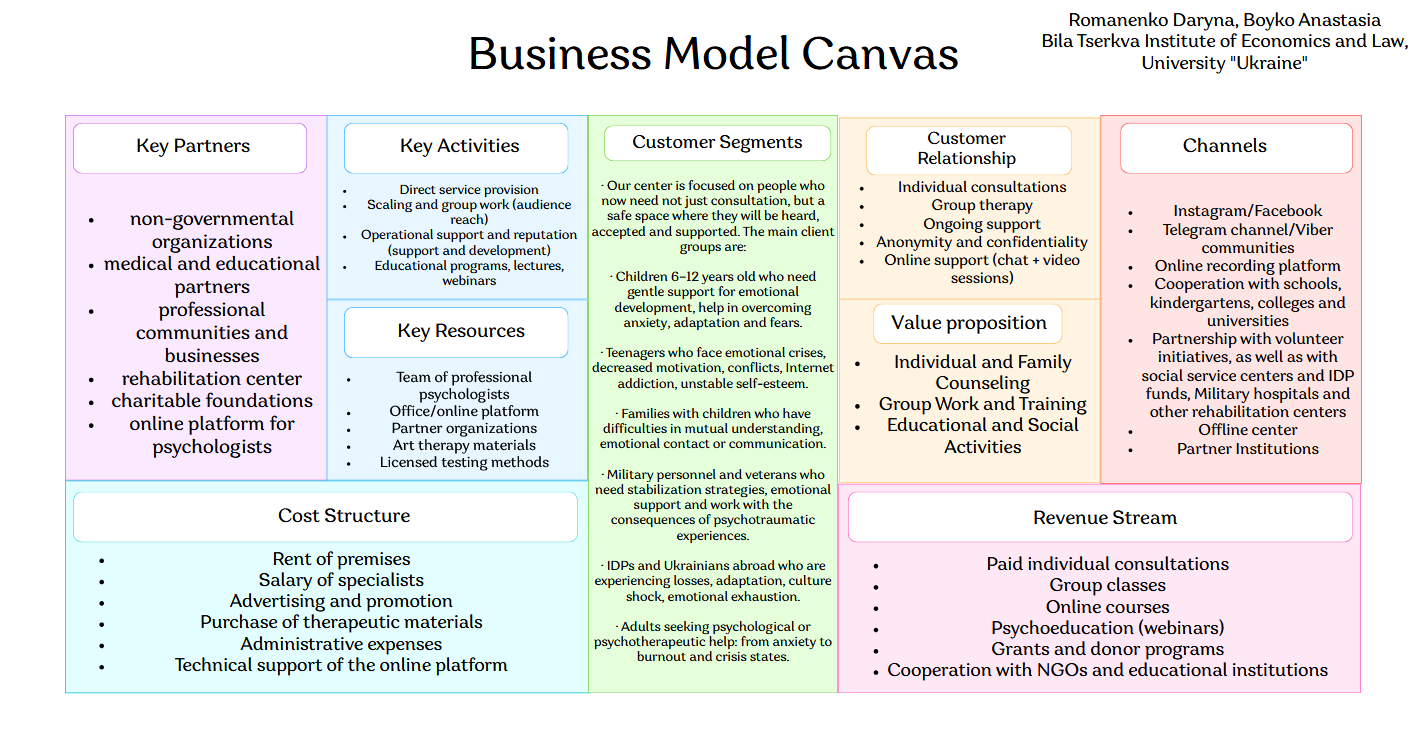
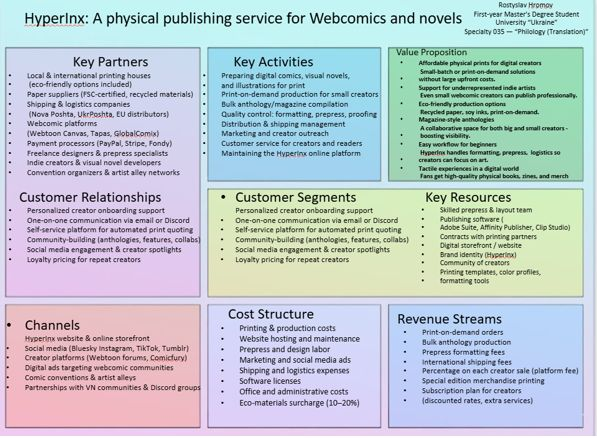
The University of Ukraine KVC_ UU engaged 40 students in the Innovation and Knowledge Valorization course. The mentoring team conducted four meetings with the students, including an introductory lecture delivered by Professor Rostyslav Dubas. Students were divided into teams to develop startup projects. They received consultations regarding their projects, and their participation in the course was monitored. The course was created on the Moodle online learning platform, where the final assessment is planned.
The developed startups include:
- Craft production
- Webcomic publishing
- Professional adaptation for veterans
- AI assistant for analyzing educational programs
- Freelance support in Ukraine
- Psychological assistance center
- Media literacy
Seven students, who proposed startup ideas and acted as group leaders, received individual consultations from the course mentors.
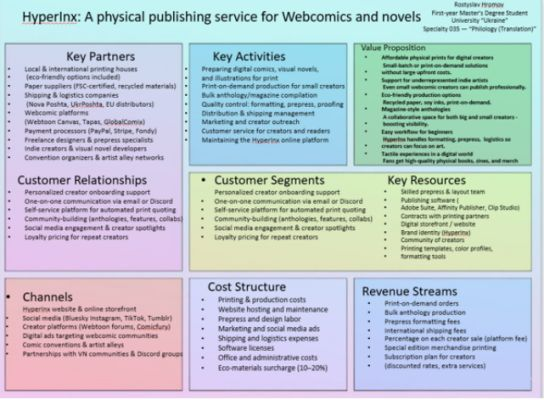
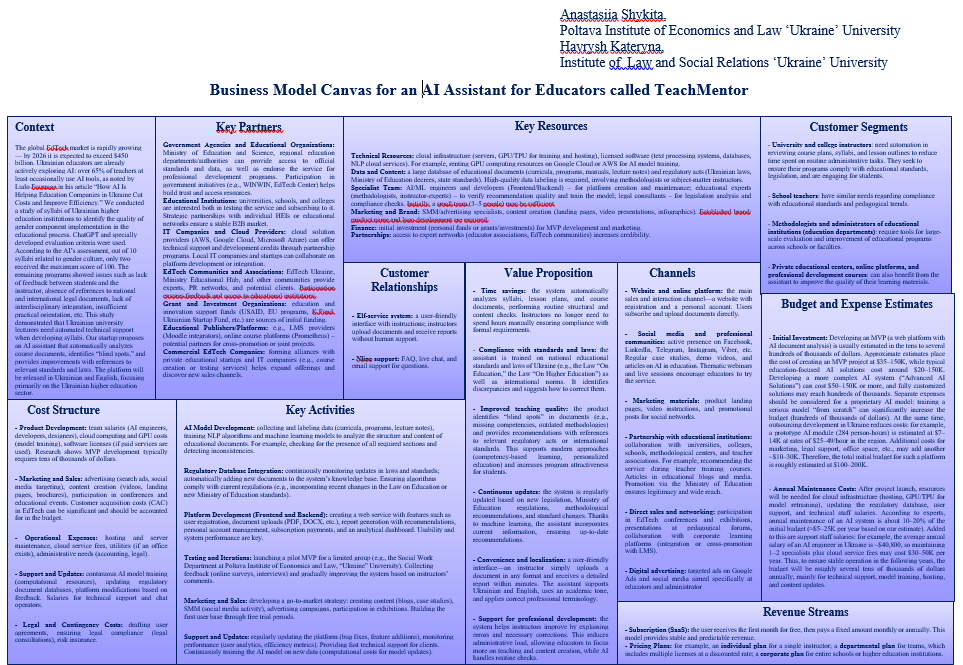
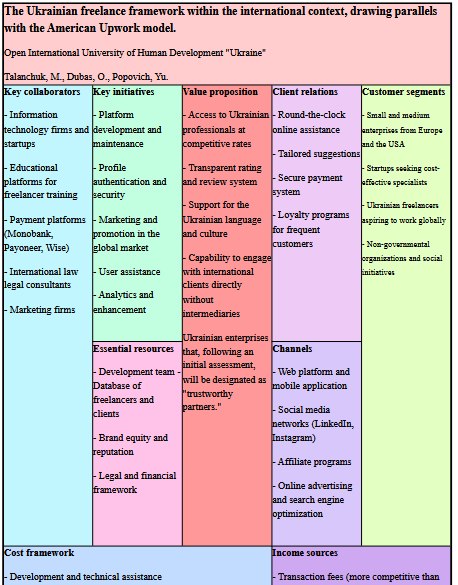
Iryna Talanchuk, PhD in Law, Associate Professor of the Department of Sectoral Law and General Legal Disciplines, Open International University of Human Development “Ukraine,” KVC_ UU, conducted “Mapping and Assessing a Regional Startup Ecosystem of Ukraine to Identify Opportunities.”
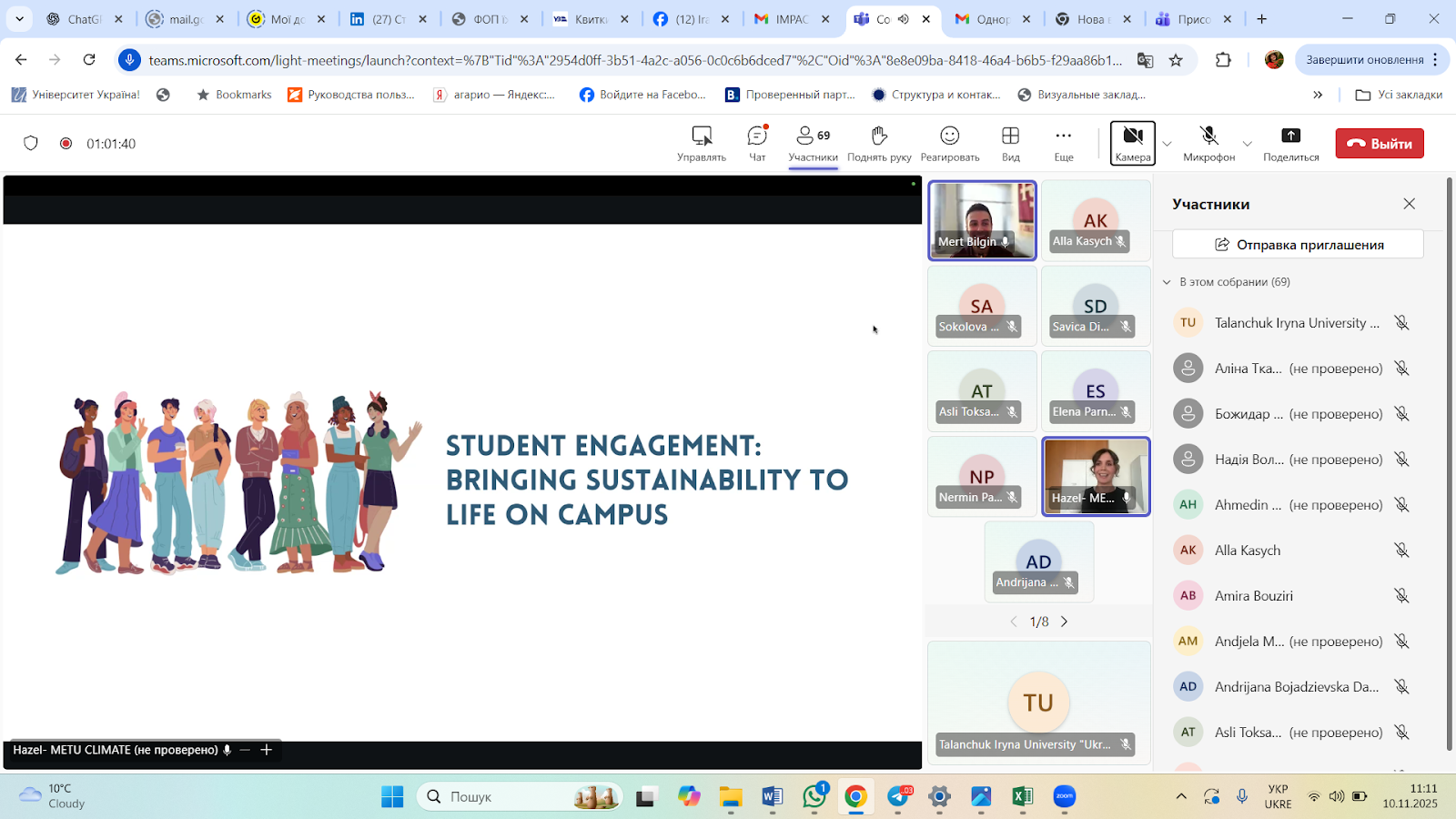
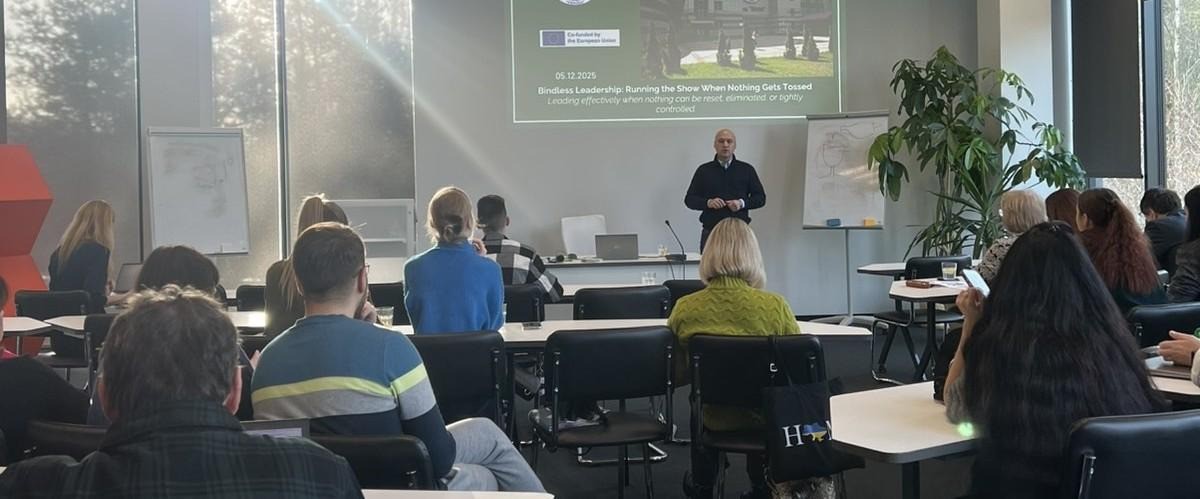
Dr. Artem Koldovskyi, Associate Professor of the Department of Management and Economics, Zhytomyr Economic and Humanitarian Institute, University “Ukraine,” KVC_ UU, participated in the Training Week on Innovation, Sustainability, and Inclusion in Higher Education (November 10–14, 2025) with a lecture on “Digital Transformation and Artificial Intelligence.”
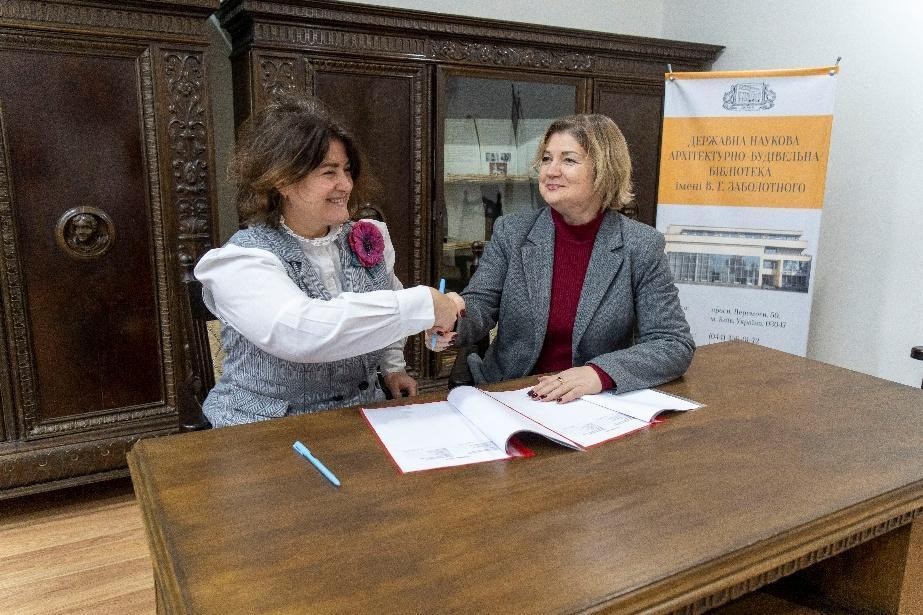
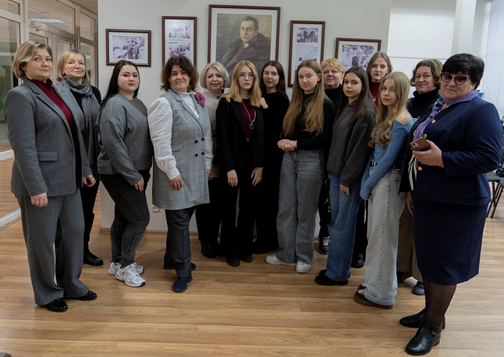
Among other achievements of the Center KVC_ UU was the signing on November 21, 2025, of a cooperation agreement with the State Scientific Architectural and Construction Library named after V. G. Zabolotny, establishing a “living cultural-educational hub” with lecture platforms, a media library, discussion spaces, and professional communities of architects, designers, and urban planners. This contributes to the development of inclusive, accessible, and barrier-free education, civic awareness, and professional competencies.
The Biennale of Inclusive Practices, organized by the KVC_UU Experts Institute of Economics and Management, served as a cross-sectoral platform for sharing experience in the field of inclusion and barrier-free development based on the principles of Diversity, Equity, and Inclusion (DEI).
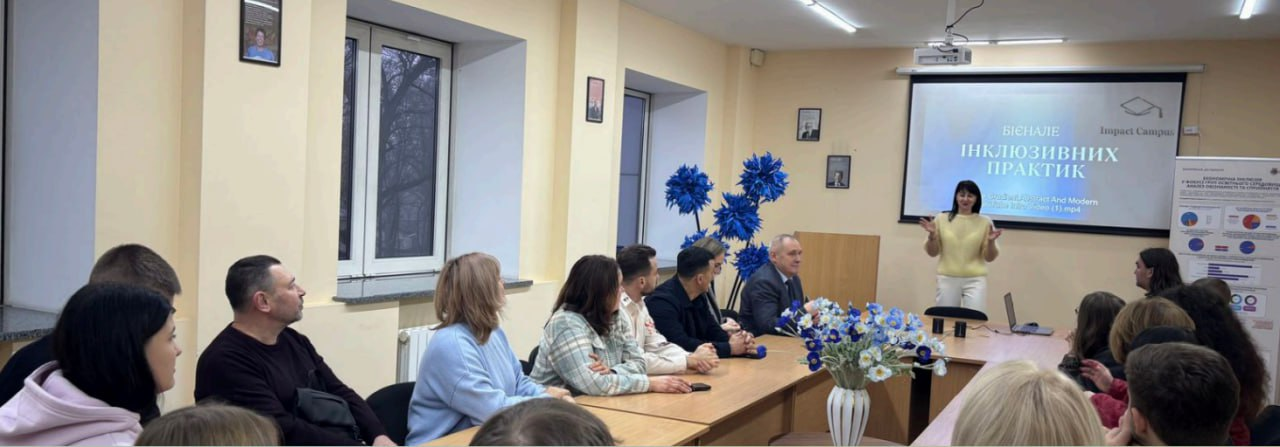
Key innovations and focus areas of the event:
Development of inclusive practices in science and education: presentation of national research findings, innovative scientific approaches to economic and social inclusion, and the role of universities in creating a barrier-free educational environment.
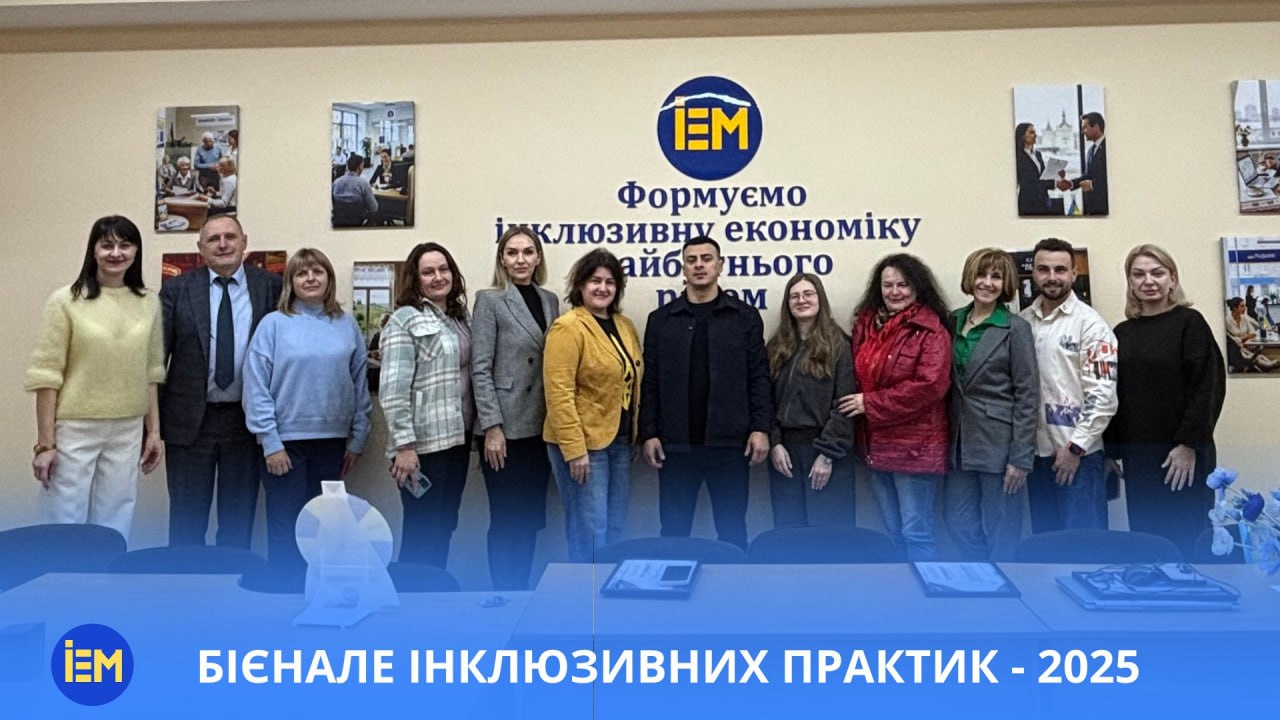
Socially oriented project approach: within the IMPACT-CAMPUS initiative, DEI principles were integrated into research activities, governance, and decision-making processes.
Cooperation with communities and civil society: active engagement of local communities, public authorities, and non-governmental organizations contributed to the development of joint solutions for strengthening inclusive policies.
Strengthening social cohesion: the exchange of practical cases and the development of a joint roadmap of actions fostered closer interaction between academia, communities, and the civil society sector.
The event demonstrated the potential of science as a driver of social change and contributed to the advancement of an inclusive society through partnership, innovation, and cross-sector collaboration.
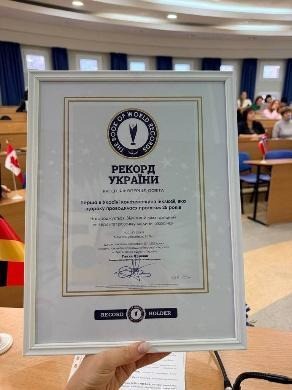
At the University “Ukraine”, the XXV International Scientific and Practical Conference “Inclusive Environment: Challenges, Prospects, and Best Practices” (November 25–27, 2025) took place, bringing together hundreds of specialists from Ukraine and other countries, creating a platform for experience sharing and dialogue on inclusive society, future education, and social transformation. This year’s conference was historic — a Ukrainian Record was set for the largest number of participants in an inclusive conference over 25 years.
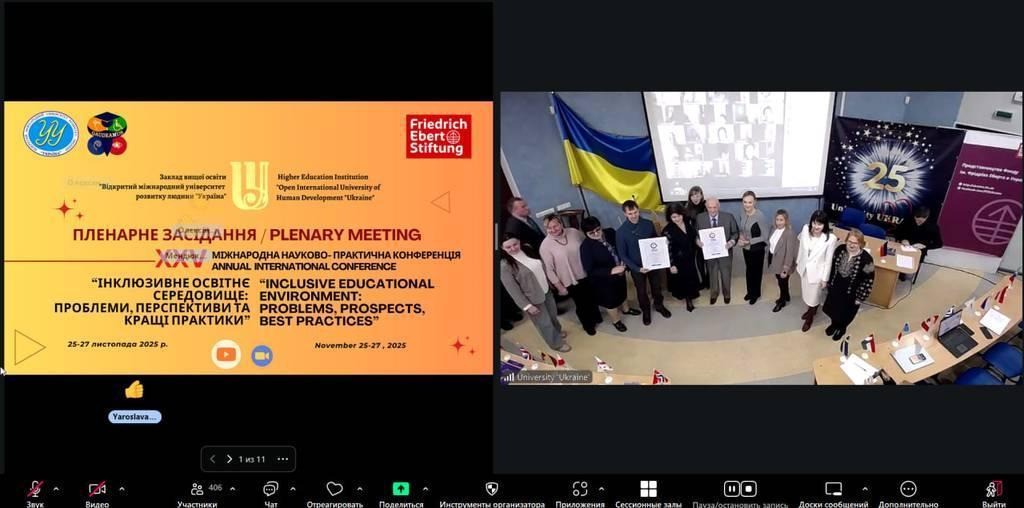
The KVC_ UU expert group provided recommendations to improve event organization and conducted seven thematic sections addressing current challenges. This allowed for reaching a wide audience, expanding international representation, and increasing the significance of the event.
These examples highlight that the key performance indicators (KPIs) of IMPACT-Campus reflect not only numerical achievements but also demonstrate deep structural changes in the ways knowledge is created, shared, and transformed into social and economic value among partners. At the regional level, the Center contributed to increasing the visibility of early-stage student solutions, identifying the importance of these solutions for the ecosystem, and regulating the processes of support and guidance for student projects, thereby fostering the sustainable development of the innovation environment.
Strategic Importance of the KVC
Alignment with National and European Policy Priorities
The strategic relevance of the KVC_ UU extends beyond operational objectives, positioning the University “Ukraine” as a key actor in national recovery and integration into the European Higher Education and Research Area. The KVC’s roadmap is aligned with major policy frameworks, including:
- Ukraine’s post-war recovery and digital transformation agenda, particularly the development of human capital, digital public services, and inclusive economic growth.
- Smart Specialisation Strategy (S3) priorities in sustainable development, digital innovation, social services modernisation, and accessible education.
- EU Digital Education Action Plan (2021–2027), where the KVC_ UU contributes to strengthening digital skills, enhancing hybrid learning, and supporting vulnerable learner groups.
- European Green Deal, as the KVC_ UU promotes sustainable community development, resource efficiency, and green entrepreneurship through targeted training and advisory services.
Competitive Positioning of the University “Ukraine”
For the University “Ukraine”, the KVC_ UU is a key differentiator that enhances its leadership in inclusive education, social innovation, and human-centered digital transformation. The Center strengthens the University’s capacity to operate as:
- a national hub for accessible and socially oriented innovation, leveraging its longstanding expertise in inclusive education;
- a driver of digital and entrepreneurial skills development across academic programmes;
- a platform for community-based innovation, supporting municipalities, NGOs, veterans’ organizations, and groups affected by the war;
- a source of applied research that transforms academic results into socially relevant products and services.
The KVC_ UU reinforces the University’s mission of empowering individuals through accessible, practice-oriented and socially transformative education.
Strengthening Institutional Capacities
The establishment of the KVC_ UU significantly enhances the University’s institutional capabilities by:
- creating a formal structure dedicated to innovation, knowledge transfer, and digital transformation;
- integrating teaching, research, and community engagement within a unified strategic framework;
- expanding opportunities for applied research, internships, and cooperation with enterprises, municipalities, NGOs and rehabilitation centres;
- supporting the adoption of modern pedagogical approaches, including hybrid learning, digital tools, and practice-based education.
These developments improve the University’s ability to respond to labour-market needs, technological changes, and post-war recovery challenges.
Contribution to Regional and National Innovation Ecosystems
KVC_ UU plays a central role in strengthening the innovation ecosystem of Kyiv and regions where the University operates. It contributes by:
- mobilising the University’s network of partnerships with public institutions, rehabilitation centres, businesses, and community organisations;
- supporting social entrepreneurship, digital transformation, and sustainable community development;
- fostering research Valorization in fields such as accessibility technologies, digital governance, health, rehabilitation;
- facilitating cross-sector collaboration under the quadruple helix model (academia–industry–government–civil society).
Strengthening International Cooperation
Through participation in IMPACT-Campus, the University “Ukraine” significantly expands its international presence and capabilities. The KVC_ UU enhances the University’s ability to:
- participate in EU-funded innovation and capacity-building projects;
- attract mobility opportunities for students and staff;
- integrate European best practices into teaching and innovation activities;
- contribute to macro-regional knowledge Valorization across Europe and neighbouring regions.
This positions the University as a proactive participant in European networks focused on sustainable development, digital skills, and inclusive innovation.
Long-Term Sustainability and Impact
KVC_ UU is designed to remain operational well beyond the IMPACT-Campus project lifecycle. Its long-term importance lies in:
- embedding innovation, digital transformation, and entrepreneurship into the University’s core mission;
- building lasting partnerships with enterprises, public bodies, NGOs, rehabilitation organisations, and international institutions;
- supporting continuous professional development for staff and students;
- fostering long-term social impact through enhanced employability and support for socially driven business creation.
Through these functions, the KVC_ UU ensures that the University “Ukraine” continues to generate economic, social, and community value for years ahead.
Development plans
Alignment with National and European Policy Priorities
The strategic relevance of the KVC_UU extends beyond operational objectives, positioning the University “Ukraine” as a key actor in national recovery and integration into the European Higher Education and Research Area. The KVC’s roadmap is aligned with major policy frameworks, including:
- Ukraine’s post-war recovery and digital transformation agenda, particularly the development of human capital, digital public services, and inclusive economic growth.
- Smart Specialisation Strategy (S3) priorities in sustainable development, digital innovation, social services modernisation, and accessible education.
- EU Digital Education Action Plan (2021–2027), where the KVC_UU contributes to strengthening digital skills, enhancing hybrid learning, and supporting vulnerable learner groups.
- European Green Deal, as the KVC_ UU promotes sustainable community development, resource efficiency, and green entrepreneurship through targeted training and advisory services.
Competitive Positioning of the University “Ukraine”
For the University “Ukraine”, the KVC_ UU is a key differentiator that enhances its leadership in inclusive education, social innovation, and human-centered digital transformation. The Center strengthens the University’s capacity to operate as:
- a national hub for accessible and socially oriented innovation, leveraging its longstanding expertise in inclusive education;
- a driver of digital and entrepreneurial skills development across academic programmes;
- a platform for community-based innovation, supporting municipalities, NGOs, veterans’ organizations, and groups affected by the war;
- a source of applied research that transforms academic results into socially relevant products and services.
The KVC_UU reinforces the University’s mission of empowering individuals through accessible, practice-oriented and socially transformative education.
Strengthening Institutional Capacities
The establishment of the KVC_UU significantly enhances the University’s institutional capabilities by:
- creating a formal structure dedicated to innovation, knowledge transfer, and digital transformation;
- integrating teaching, research, and community engagement within a unified strategic framework;
- expanding opportunities for applied research, internships, and cooperation with enterprises, municipalities, NGOs and rehabilitation centres;
- supporting the adoption of modern pedagogical approaches, including hybrid learning, digital tools, and practice-based education.
These developments improve the University’s ability to respond to labour-market needs, technological changes, and post-war recovery challenges.
Contribution to Regional and National Innovation Ecosystems
KVC_UU plays a central role in strengthening the innovation ecosystem of Kyiv and regions where the University operates. It contributes by:
- mobilising the University’s network of partnerships with public institutions, rehabilitation centres, businesses, and community organisations;
- supporting social entrepreneurship, digital transformation, and sustainable community development;
- fostering research Valorization in fields such as accessibility technologies, digital governance, health, rehabilitation;
- facilitating cross-sector collaboration under the quadruple helix model (academia–industry–government–civil society).
Strengthening International Cooperation
Through participation in IMPACT-Campus, the University “Ukraine” significantly expands its international presence and capabilities. The KVC_ UU enhances the University’s ability to:
- participate in EU-funded innovation and capacity-building projects;
- attract mobility opportunities for students and staff;
- integrate European best practices into teaching and innovation activities;
- contribute to macro-regional knowledge Valorization across Europe and neighbouring regions.
This positions the University as a proactive participant in European networks focused on sustainable development, digital skills, and inclusive innovation.
Long-Term Sustainability and Impact
KVC_UU is designed to remain operational well beyond the IMPACT-Campus project lifecycle. Its long-term importance lies in:
- embedding innovation, digital transformation, and entrepreneurship into the University’s core mission;
- building lasting partnerships with enterprises, public bodies, NGOs, rehabilitation organisations, and international institutions;
- supporting continuous professional development for staff and students;
- fostering long-term social impact through enhanced employability and support for socially driven business creation.
Through these functions, the KVC_ UU ensures that the University “Ukraine” continues to generate economic, social, and community value for years ahead.
